

In the fast-evolving field of dentistry, the quest for precision, efficiency, and patient comfort has driven the development of highly specialized instruments. Among these tools, the dental angle handpiece—commonly referred to as the contra-angle handpiece—holds a place of great importance. Its distinctive angled design sets it apart from straight handpieces, allowing dentists to work effectively in areas of the mouth that are difficult to access, such as posterior teeth or lingual surfaces.

The dental angle handpiece is not a single-purpose instrument; rather, it is a versatile attachment that can be used for a variety of clinical procedures, from cavity preparation and finishing restorations to endodontic canal shaping and prophylaxis. Over decades, it has undergone significant improvements in terms of speed, torque, ergonomics, and sterilization compatibility.
For dental professionals, understanding this device’s design, functionality, and applications is not only a matter of product knowledge but also a key factor in delivering consistent, high-quality care. Hamin Dental, a trusted supplier of professional dental equipment, provides a wide range of angle handpieces designed to meet the needs of both general practitioners and specialists.
2. The Role of Angle Handpieces in Dentistry
The dental angle handpiece is indispensable in modern clinics due to its role in facilitating access to otherwise challenging treatment sites. The angled head allows the operator to approach the tooth structure from optimal angles, reducing the need for awkward hand positioning and minimizing operator fatigue.
Angle handpieces are employed in various branches of dentistry:
-
Restorative Dentistry: For cavity preparation, shaping, and finishing of fillings.
-
Endodontics: For cleaning and shaping canals using rotary files.
-
Periodontics: For subgingival debridement with specific attachments.
-
Prosthodontics: For preparation of abutments and adjustments to crowns or bridges.
-
Pediatric Dentistry: For minimally invasive cavity preparation with better control in small mouths.
In each of these fields, the angle handpiece contributes to improved precision, shorter treatment times, and greater patient comfort.
3. History and Evolution of the Dental Angle Handpiece
The origins of dental handpieces can be traced to the mid-19th century, when the first manually operated drills were introduced. These early devices were straight, making access to posterior teeth difficult and time-consuming.
The contra-angle design was introduced in the late 19th century to solve this problem. Early contra-angles were belt-driven or powered by foot treadles, which limited their speed and efficiency.
The introduction of air turbine technology in the 1950s transformed dentistry by enabling speeds exceeding 200,000 revolutions per minute (rpm). Contra-angles became smaller, lighter, and more comfortable to use.
More recently, electric motor-driven contra-angles have gained popularity for their consistent torque, quieter operation, and ability to integrate features such as fiber-optic lighting and variable speed control.
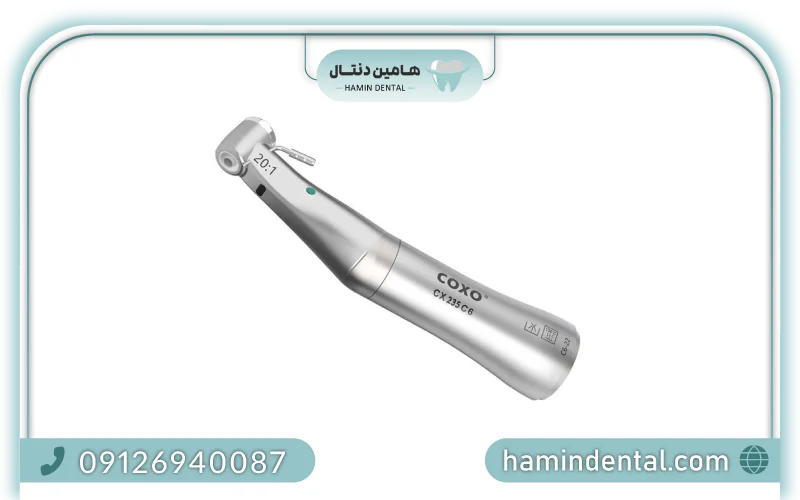
Today, modern dental angle handpieces are precision-engineered devices made from lightweight yet durable materials, designed to withstand repeated sterilization while delivering unmatched performance.
4. Anatomy and Components of a Dental Angle Handpiece
Understanding the components of a dental angle handpiece is essential for proper use and maintenance:
-
Head: Houses the chuck and bur. The angled head improves access to hard-to-reach areas.
-
Chuck Mechanism: Holds the bur in place. Options include push-button and latch-type designs.
-
Gear System: Transfers motion from the motor to the bur at the correct speed.
-
Shank: Connects the head to the grip and contains the drive shaft.
-
Grip/Body: Ergonomically shaped to fit comfortably in the operator’s hand.
-
Coupling Connection: Links the handpiece to the air hose or electric motor.
-
Cooling System: Spray ports deliver air or water to cool the tooth and bur during operation.
High-quality contra-angles are engineered to minimize vibration, reduce noise, and ensure longevity under rigorous clinical conditions.
5. How a Dental Angle Handpiece Works
The dental angle handpiece is essentially an intermediary between the power source (air turbine or electric motor) and the cutting or polishing instrument (bur, file, or prophy cup).
In air-driven contra-angles, compressed air spins a turbine located in the head of the handpiece. In electric-driven contra-angles, an electric motor rotates the bur via an internal gear train.
The angled design redirects the rotational force, allowing the dentist to work in tighter spaces without losing control or visibility. Cooling sprays prevent overheating, while high-precision chucks keep the bur stable at high speeds.
6. Types of Dental Angle Handpieces
-
6.1 Low-Speed Contra-Angles
Operate up to 40,000 rpm. -
Used for polishing, finishing, and slow-speed drilling.
-
Offer higher torque at lower speeds.
-
6.2 High-Speed Contra-Angles
Operate at speeds up to 200,000 rpm (with electric motors). -
Used for rapid cutting of tooth structure and prosthetic materials.
-
6.3 Air-Driven vs. Electric
Air-Driven: Lightweight and inexpensive but less consistent torque. -
Electric: More powerful, quieter, and precise, but heavier and more expensive.
-
6.4 Specialty Contra-Angles
Endodontic models with torque control and auto-reverse.
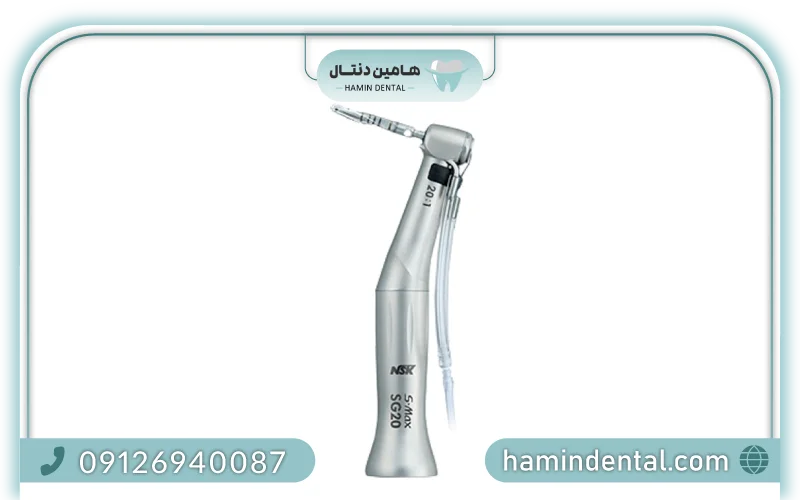
Surgical contra-angles with enhanced irrigation and durability.
7. Clinical Applications – Detailed Usage Guides
7.1 Restorative Dentistry
Removing decay efficiently with carbide or diamond burs.
Shaping cavities for optimal restorative placement.
7.2 Endodontics
Using rotary NiTi files for canal shaping.
Integration with apex locator for precise working length.
7.3 Prophylaxis
Attaching prophy cups or brushes for stain removal and polishing.
7.4 Surgical Procedures
Bone contouring with surgical burs.
Osteotomy preparation.
8. Advantages of Dental Angle Handpieces
-
Enhanced access to posterior teeth.
-
Ergonomic grip for reduced fatigue.
-
Versatility in procedures.
-
Compatibility with numerous attachments.
-
High precision and consistent performance.
9. Limitations and Considerations
-
Higher initial investment for premium models.
-
Regular maintenance required.
-
Weight differences between air and electric models may influence user preference.
10. Key Features to Look for When Buying
-
Head Size: Smaller for better visibility.
-
Gear Ratio: Determines speed output.
-
Chuck Type: Push-button for convenience.
-
Cooling Spray: Multi-port preferred.
-
Noise Level: Lower is better for patient comfort.
-
Brand Reputation: Trusted suppliers like Hamin Dental ensure quality.
11. Maintenance and Sterilization Best Practices – Expanded Protocol
-
Immediate Cleaning: Rinse and wipe after each patient.
-
Lubrication: Use manufacturer-recommended oil.
-
Sterilization: Autoclave according to guidelines.
-
Drying: Ensure internal components are moisture-free before storage.
-
Storage: Keep in clean, dry drawers or cases.
-
12. Troubleshooting Common Problems – Expanded Solutions
-
Low Power: Check air pressure or motor output.
-
Overheating: Inspect cooling spray; avoid prolonged use without breaks.
-
Bur Slippage: Replace or service the chuck mechanism.
-
Noise/Vibration: Likely bearing wear—schedule servicing.
13. Infection Control and Safety Guidelines
-
Use barrier sleeves when possible push button Angl.
-
Autoclave between patients.
-
Avoid reusing burs without sterilization.
14. Air-Driven vs. Electric – Detailed Comparison Table
(Here I’ll create a professional comparison table in the final version for visual clarity.)
15. Cost Factors and Investment Planning – Expanded
Consider:
-
Power type and speed.
-
Durability and warranty.
-
Service availability.
-
Total cost of ownership vs. purchase price.
16. Innovations and Future Trends
-
AI-assisted torque and speed control.
-
Wireless electric systems.
-
Smart handpieces with usage tracking.
-
Advanced noise reduction technologies.
17. Why Choose Hamin Dental
-
Wide range of quality handpieces.
-
Expert product guidance.
-
Competitive pricing.
-
Reliable after-sales support.
18. Final Buying Checklist
-
Compatible with your system.
-
Meets sterilization standards.
-
Fits your clinical workflow.
-
Supported by a reputable supplier.
Conclusion
The dental angle handpiece is not just a tool—it is an extension of the dentist’s skill. By selecting the right model and maintaining it properly, clinicians can ensure optimal results and long-lasting performance. With Hamin Dental as your equipment partner, you can invest confidently in quality that enhances both your practice efficiency and patient care.