
Home

Buy Original License: Navigating the Legal Landscape

You're likely aware of the importance of buying original licenses for software, but do you know what's at stake if you don't? Pirated software can expose you to serious security threats, including malware and data breaches, which can result in significant financial losses. Moreover, using unlicensed software can put your business at risk of lawsuits and reputational damage. As you consider your software options, it's essential to understand the complexities of copyright laws and the benefits of original licenses. But what exactly are the consequences of non-compliance, and how can you ensure you're on the right side of the law? comprare patente online rischi.

When it comes to protecting creative work, understanding copyright laws is crucial for artists, writers, and musicians looking to safeguard their intellectual property. You need to know how to protect your original work from being used without permission.

In the United States, copyright law gives you exclusive rights to reproduce, distribute, and display your work, as well as create derivative works.

If you're creating original work, you own the copyright to it as soon as it's fixed in a tangible form. This means that as soon as you write a song, draw a picture, or write a story, you own the copyright to it.

You don't need to register your work with the U.S. Copyright Office to own the copyright, but registering your work can provide additional protection and make it easier to prove ownership.

Understanding copyright laws can help you navigate the complex world of intellectual property and ensure that your creative work is protected. By taking the time to learn about copyright laws, you can safeguard your work and prevent others from using it without permission.

Risks of Pirated Software

Using pirated software may seem like an easy way to cut costs, but it comes with serious risks that can compromise your digital security and put you at risk of legal consequences. When you install pirated software, you're exposing your computer to potential malware and viruses that can steal your personal data, corrupt your files, and even give hackers remote access to your system.

These risks can lead to financial losses, identity theft, and reputation damage.

Moreover, pirated software often lack critical security updates and patches, making your system even more vulnerable to attacks. You may also experience software crashes, errors, and compatibility issues, which can hinder your productivity and efficiency.

Furthermore, using pirated software can lead to serious legal consequences, including fines and lawsuits. Copyright holders can take action against you for violating their intellectual property rights. In some cases, you may even face criminal charges.

Benefits of Original Licenses

With original licenses, you're not only supporting software developers who invest time and money into creating and maintaining their products, but you're also investing in your own digital security and peace of mind.

By choosing original licenses, you're significantly reducing the risk of malware and other cyber threats associated with pirated software. You'll also have access to regular updates and patches, which will help protect your system from newly discovered vulnerabilities.

Original licenses often come with technical support, which can be invaluable if you encounter any issues with the software. This support can save you time and frustration, as you'll have access to expert assistance to resolve any problems.

Additionally, original licenses typically include warranties, which can provide you with financial protection in case the software doesn't perform as promised.

How to Purchase Legally

How to Purchase Legally

Before making a purchase, verify the seller's authenticity to ensure you're buying from a legitimate source.

Check if the seller is authorized by the software manufacturer or the copyright holder. You can do this by visiting the official website of the software or contacting the manufacturer directly.

Look for a "where to buy" or "authorized resellers" section, which can help you identify legitimate sellers.

When purchasing online, make sure the website is secure by checking for HTTPS in the URL and a lock icon in the address bar.

Be wary of websites that offer significantly lower prices than others, as they may be counterfeit or unauthorized resellers.

Read reviews and check the seller's ratings before making a purchase.

When purchasing from a physical store, ensure the packaging is sealed and the software is accompanied by documentation and a license key.

Check the packaging for any signs of tampering or unauthorized modifications.

Consequences of Non-Compliance

Buying from a legitimate source is just the first step in ensuring you're on the right side of the law. However, if you fail to do so, you'll face severe consequences.

Using unlicensed software or a pirated license can lead to hefty fines and penalties. You may receive a lawsuit from the software manufacturer or the license owner, which can result in significant financial losses.

In addition to financial losses, non-compliance can also damage your reputation.

If your business is found to be using unlicensed software, it can lead to a loss of credibility and trust among your customers and partners. This can ultimately impact your business's bottom line and long-term success.

Furthermore, non-compliance can also lead to data breaches and security risks.

Unlicensed software often lacks the necessary security updates and patches, making your system vulnerable to cyber-attacks. By not buying an original license, you're not only breaking the law but also putting your business's sensitive data at risk. It's essential to prioritize compliance to avoid these consequences and ensure the success and security of your business.

Conclusion

By buying an original license, you're not only protecting yourself from the risks associated with pirated software, but also supporting software developers and upholding copyright laws. You'll have access to essential security updates, technical support, and warranties, ensuring a secure and efficient computing experience. Make the smart choice and purchase from authorized sellers to avoid severe consequences and financial losses. Your business and reputation depend on it.

Snow Removal Regulations and Guidelines in Winnipeg

As a Winnipeg property owner, you're likely aware that snow removal is a significant responsibility that comes with owning a home or business. You're required to clear snow from sidewalks, driveways, and parking lots within specific timeframes, but do you know exactly what's expected of you? Failure to comply with the regulations can result in fines, which can be a costly addition to your winter expenses. Understanding the city's snow removal regulations and guidelines is crucial to avoiding these penalties, but where do you start? What else do you need to know to stay compliant this winter?

Responsibilities of Property Owners

As a property owner in Winnipeg, you're on the hook for clearing snow from your sidewalks and driveways. It's your responsibility to ensure these areas are safe for pedestrians and vehicles.

This includes clearing snow from the entire width of your sidewalk, including any pedestrian ramps. You must also clear snow from your driveway, including the area in front of your garage.

If you have a corner lot, you're responsible for clearing the sidewalks on both streets. If you have a property that backs onto a lane, you're responsible for clearing the sidewalk and any access point to the lane.

You must also clear any snow that accumulates around fire hydrants and catch basins on your property.

Additionally, you're responsible for sanding or salting icy areas on your sidewalk and driveway to prevent slipping hazards.

You can use environmentally friendly alternatives to salt, such as sand or magnesium chloride, to reduce the environmental impact.

Snow Removal Timeframes and Deadlines

Clearing snow from your property in a timely manner is crucial to maintaining safe walkways and driveways in Winnipeg. As a property owner, you're responsible for clearing snow and ice from your sidewalks, driveways, and parking lots within a specified timeframe. You have 36 hours after a snowfall to clear your sidewalks and 72 hours to clear your driveways and parking lots. Keep in mind that these timeframes may vary depending on the specific bylaw in your area.

It's essential to regularly check the weather forecast and plan accordingly to avoid any last-minute rush.

You can also consider hiring a snow removal contractor if you're unable to clear the snow yourself. Make sure to review your contract with the contractor to ensure they're aware of the timeframes and deadlines.

Additionally, be aware that failure to comply with snow removal regulations can result in fines and penalties. Stay on top of snow removal to avoid any inconvenience and maintain a safe environment for yourself and others.

City of Winnipeg Snow Removal Services

While snow removal is primarily a property owner's responsibility in Winnipeg, the City of Winnipeg also offers snow removal services to maintain safe roads and public spaces.

You can expect the City to clear and maintain major roads, highways, bus routes, and bike paths. Additionally, the City is responsible for clearing snow from sidewalks adjacent to city-owned properties, such as libraries, community centers, and public buildings.

If you're a property owner, you might be wondering if the City offers any snow removal services for your specific property.

In some cases, the City does provide snow removal services for private properties, but this typically only applies to properties that meet specific criteria, such as senior's residences or properties with mobility-impaired residents.

You can contact the City to see if your property qualifies for these services.

The City also offers a Snow Angel Program, which connects volunteers with seniors and people with disabilities who need help shoveling snow.

You can register to receive help or volunteer your time to help those in need.

Snow Removal Methods and Equipment

Snow Removal Methods and Equipment

Typically, the City of Winnipeg uses a combination of methods and equipment to efficiently remove snow from public spaces. You'll notice that they employ a variety of plows, sanders, and graders to clear streets, sidewalks, and other areas.

The city's snow removal fleet includes large graders, medium-sized plows, and smaller snow blowers for pedestrian areas. They also use pickup trucks with plows and sanders for residential streets.

When it comes to snow removal methods, the city uses both salting and sanding to improve traction on icy roads. They also use brine, a saltwater solution, to pre-treat commercial snow hauling services ts before snowfall.

This helps to prevent ice from forming on the road surface. You may also notice that the city uses snow fences in open areas to prevent drifting and blowing snow.

The city's snow removal equipment is designed to be efficient and effective. They use GPS tracking to monitor plows and other equipment, ensuring that all areas are cleared quickly and safely.

Penalties for Non-Compliance

If you fail to comply with the City of Winnipeg's snow removal regulations, you can face penalties. As a property owner, it's essential to understand the consequences of non-compliance to avoid any unnecessary fines or charges.

You may receive a warning notice if you're found not to be complying with the regulations. However, repeated offenses can result in fines ranging from $100 to $1,000.

If you're issued a fine, you'll need to pay it within the specified timeframe to avoid any additional penalties. In some cases, the City of Winnipeg may also take the necessary steps to clear the snow and ice from your property, and you'll be required to reimburse the costs.

It's crucial to take snow removal regulations seriously to avoid any penalties and ensure public safety. By complying with the regulations, you're not only avoiding fines but also contributing to a safer and more accessible community.

Make sure to familiarize yourself with the City of Winnipeg's snow removal regulations to avoid any issues during the winter season.

Conclusion

You'll be better equipped to handle Winnipeg's snowy winters by understanding your responsibilities as a property owner. It's crucial to clear snow from sidewalks, driveways, and parking lots within the specified timeframes to avoid fines. Staying on top of snow removal and using proper methods and equipment will not only keep you compliant but also ensure the safety of those around you.

Understanding Robotic Process Automation (RPA) Bots

In the rapidly evolving world of business technology, Robotic Process Automation (RPA) has emerged as a powerful tool for enhancing efficiency and productivity. RPA bots are revolutionizing how organizations handle repetitive tasks, allowing human employees to focus on more strategic activities. This article explores the concept of RPA bots, their benefits, and their applications across various industries.

What Are RPA Bots?

RPA bots, or software robots, are designed to automate repetitive, rule-based tasks that were traditionally performed by humans. These bots interact with digital systems and applications in the same way a human would, but with greater speed and accuracy. They use predefined rules and scripts to execute tasks such as data entry, processing transactions, and generating reports. By mimicking human actions, RPA bots can operate across multiple applications and systems without the need for deep integration or complex programming.

The Benefits of RPA Bots

The adoption of RPA bots offers numerous advantages for organizations. One of the primary benefits is increased efficiency. RPA bots can work around the clock without breaks, significantly reducing the time required to complete tasks. This leads to faster processing times and improved overall productivity. Additionally, RPA bots reduce the likelihood of errors that can occur with manual data entry and processing, resulting in higher accuracy and consistency in business operations.

Cost savings are another major benefit of RPA bots. By automating routine tasks, organizations can reduce the need for additional human resources, leading to lower labor costs. Furthermore, the scalability of RPA technology allows businesses to easily adjust the number of bots in operation based on their needs, providing a flexible and cost-effective solution.

Enhanced compliance is also a key advantage of RPA bots. These bots adhere to predefined rules and regulations, ensuring that processes are executed consistently and in accordance with organizational policies. This helps to minimize the risk of compliance issues and supports adherence to industry standards and legal requirements.

Applications of RPA Bots

RPA bots are versatile and can be applied across various industries and business functions. In the finance sector, for example, RPA bots are used for tasks such as processing invoices, managing accounts payable and receivable, and handling regulatory reporting. By automating these processes, financial institutions can streamline operations and improve accuracy.

In the healthcare industry, RPA bots assist with patient data management, appointment scheduling, and billing processes. They can also help with insurance claims processing and compliance reporting, reducing administrative burdens and allowing healthcare professionals to focus more on patient care.

The retail sector benefits from RPA bots in areas such as inventory management, order processing, and customer service. Bots can handle tasks like updating stock levels, processing orders, and responding to customer inquiries, leading to a more efficient and responsive retail environment.

Human resources departments also leverage RPA bots for tasks such as employee onboarding, payroll processing, and benefits administration. By automating these functions, HR teams can reduce administrative overhead and enhance the employee experience.

Challenges and Considerations

While RPA bots offer significant benefits, there are also challenges and considerations to keep in mind. One of the primary challenges is the initial investment required for implementing RPA technology. Organizations must consider the costs associated with acquiring and deploying RPA software, as well as the potential need for training and support.

Another consideration is the potential impact on the workforce. While RPA bots can reduce the need for manual labor, there may be concerns about job displacement. It is essential for organizations to address these concerns by providing opportunities for upskilling and reskilling employees to adapt to new roles that complement RPA technology.

Additionally, the successful implementation of RPA bots requires careful planning and governance. Organizations must ensure that bots are designed and tested thoroughly to avoid issues such as system errors or unintended consequences. Ongoing monitoring and maintenance are also crucial to ensure that RPA bots continue to operate effectively and deliver the desired results.

The Future of RPA Bots

As technology continues to advance, the future of RPA bots looks promising. Innovations such as artificial intelligence (AI) and machine learning (ML) are expected to enhance the capabilities of RPA bots, enabling them to handle more complex tasks and make intelligent decisions. This will further expand the potential applications of RPA technology and drive even greater efficiencies across various industries.

Conclusion

RPA bots are transforming the way organizations approach repetitive tasks and business processes. By offering increased efficiency, cost savings, and enhanced compliance, RPA bots are proving to be a valuable asset in today’s competitive business landscape. As technology evolves, the capabilities of RPA bots will continue to expand, providing new opportunities for businesses to optimize their operations and achieve greater success.

Understanding Virtual Private Cloud (VPC): A Comprehensive Guide

In today’s digital landscape, businesses are increasingly turning to cloud solutions to enhance their IT infrastructure. One such solution gaining prominence is the Virtual Private Cloud (VPC). This technology offers a unique blend of security, flexibility, and control, making it an appealing choice for organizations seeking to optimize their cloud environments. This article explores what a VPC is, its key features, benefits, and how it can be leveraged effectively.

What is a Virtual Private Cloud (VPC)?

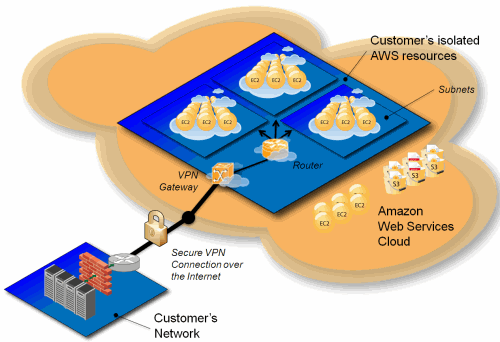
A Virtual Private Cloud (VPC) is a private, isolated section of a public cloud environment. It allows organizations to deploy and manage their resources in a logically isolated network that mimics a traditional on-premises data center. This virtualized environment is hosted within a public cloud infrastructure but provides enhanced security and control over the deployed resources.

The concept of a VPC enables users to have their own private network within a cloud provider’s infrastructure, with the ability to define and manage network configurations, such as IP address ranges, subnets, route tables, and network gateways. This isolation ensures that resources within the VPC are protected from other users of the same public cloud, offering a high level of data privacy and security.

Key Features of a VPC

One of the primary features of a VPC is its ability to provide a secure and customizable network environment. Users can set up private IP addresses, create subnets to segment their network, and configure network access controls to manage traffic between different parts of the VPC. Additionally, VPCs often support Virtual Private Network (VPN) connections, which allow for secure communication between the VPC and on-premises networks.

Another important feature is the capability to use network address translation (NAT) to control outbound traffic. NAT gateways can be employed to allow resources within a VPC to access the internet while keeping the internal IP addresses hidden from the public domain. This adds an extra layer of security by ensuring that only necessary traffic is exposed to the outside world.

Benefits of Using a VPC

The benefits of implementing a VPC are manifold. One significant advantage is enhanced security. Since a VPC provides a logically isolated network, organizations can implement robust security policies and controls tailored to their specific needs. This isolation helps protect sensitive data and applications from potential threats and unauthorized access.

Flexibility is another key benefit of VPCs. Organizations can easily scale their resources up or down based on demand, without the need for significant hardware investments. This elasticity allows businesses to adapt quickly to changing requirements and optimize their cloud expenditures.

Cost efficiency is also a notable advantage. By using a VPC, organizations can leverage the economies of scale provided by public cloud providers while maintaining a high level of control over their network environment. This combination helps reduce operational costs and improve overall financial efficiency.

Effective Utilization of a VPC

To make the most of a VPC, organizations should carefully plan their network architecture. This involves designing an effective subnet layout, configuring security groups and network access control lists (ACLs), and setting up appropriate routing rules. Proper planning ensures that the VPC is optimized for performance, security, and cost-effectiveness.

Another important consideration is the integration of a VPC with other cloud services. Many cloud providers offer a range of complementary services, such as load balancers, databases, and storage solutions, that can be seamlessly integrated with a VPC. Leveraging these services can enhance the overall functionality and efficiency of the cloud environment.

Regular monitoring and management are also crucial. Organizations should implement tools and practices to continuously monitor the performance and security of their VPC. This includes setting up alerts for unusual activities, reviewing access logs, and performing periodic security assessments.

Conclusion

The Virtual Private Cloud (VPC) represents a powerful and versatile cloud solution for organizations seeking a secure, flexible, and cost-effective IT infrastructure. By providing a private, isolated network environment within a public cloud, VPCs offer enhanced security, scalability, and operational efficiency. With careful planning and management, businesses can effectively leverage VPCs to optimize their cloud environments and meet their evolving needs.

Embracing The Multi-Cloud Strategy: Navigating A Modern IT Landscape

In today’s rapidly evolving technological landscape, businesses are increasingly adopting a multi-cloud strategy. This approach, which involves leveraging services from multiple cloud providers, offers numerous advantages but also presents unique challenges. Understanding the nuances of a multi-cloud strategy can help organizations optimize their IT operations and enhance their overall agility.

The Rise of Multi-Cloud

The shift towards multi-cloud environments reflects a broader trend in IT towards greater flexibility and resilience. Companies are no longer relying on a single cloud provider to meet all their needs. Instead, they are using a combination of services from various providers, such as Amazon Web Services (AWS), Microsoft Azure, Google Cloud Platform (GCP), and others. This trend is driven by several factors, including the desire to avoid vendor lock-in, access best-of-breed services, and enhance disaster recovery capabilities.

Benefits of Multi-Cloud Strategy

One of the primary advantages of a multi-cloud strategy is flexibility. By utilizing multiple cloud providers, organizations can tailor their cloud environments to meet specific needs and preferences. For instance, they might choose one provider for its robust machine learning capabilities, another for its superior data storage solutions, and yet another for its high-performance computing resources. This approach allows businesses to leverage the strengths of each provider, ensuring they get the best possible services for their requirements.

Additionally, multi-cloud strategies can enhance resilience and reduce the risk of downtime. If one cloud provider experiences an outage or other issues, organizations can rely on their other cloud services to maintain operations. This diversification helps ensure that critical applications and data remain accessible, minimizing the impact of potential disruptions.

Another significant benefit is the ability to avoid vendor lock-in. By spreading their workloads across different cloud providers, businesses can mitigate the risk of becoming overly dependent on a single provider. This not only provides greater negotiating leverage but also allows organizations to switch providers more easily if their needs change or if they find a better fit for their requirements.

Challenges of Multi-Cloud Strategy

Despite its advantages, a multi-cloud strategy also comes with its own set of challenges. Managing multiple cloud environments can be complex, requiring robust integration and orchestration to ensure that different systems work seamlessly together. This complexity can lead to increased operational overhead and the need for specialized skills to manage and optimize diverse cloud environments effectively.

Security and compliance are also major concerns. With data and applications spread across multiple providers, ensuring consistent security practices and compliance with regulations can be challenging. Organizations must implement comprehensive security strategies and tools to protect their data across different cloud platforms. This often involves deploying unified security policies and leveraging advanced monitoring and analytics to detect and respond to potential threats.

Cost management is another area where multi-cloud strategies can pose difficulties. While the flexibility of using multiple providers can lead to cost savings, it can also result in unexpected expenses if not carefully managed. Organizations need to monitor and optimize their cloud usage to avoid over-provisioning and ensure they are getting the best value for their investments.

Best Practices for Implementing a Multi-Cloud Strategy

To successfully navigate the complexities of a multi-cloud environment, organizations should adopt several best practices. First and foremost, developing a clear cloud strategy is essential. This strategy should outline the goals and objectives of using multiple cloud providers, as well as the criteria for selecting and integrating different services.

Effective management and orchestration tools are also crucial. Investing in solutions that provide visibility and control across multiple cloud environments can help organizations streamline operations and ensure consistent performance and security. Additionally, leveraging automation and orchestration tools can help manage the complexity of multi-cloud environments, reducing the need for manual intervention and minimizing the risk of errors.

Finally, ongoing monitoring and optimization are key to maintaining an effective multi-cloud strategy. Regularly reviewing cloud usage and performance can help identify areas for improvement and ensure that the organization is achieving its desired outcomes. This proactive approach can help businesses stay agile and responsive to changing needs and opportunities in the cloud landscape.

Conclusion

A multi-cloud strategy offers significant benefits in terms of flexibility, resilience, and avoidance of vendor lock-in. However, it also presents challenges related to management, security, and cost. By understanding these dynamics and adopting best practices, organizations can leverage the power of multiple cloud providers to enhance their IT operations and drive innovation. As the cloud computing landscape continues to evolve, a well-executed multi-cloud strategy will be a valuable asset for businesses seeking to stay ahead in a competitive environment.